But they’re gifted. Won’t they be fine?” Rethinking what gifted children need
The word gifted sounds inherently positive. It suggests that a child has been given something extra. An ability that should make learning easier and open doors rather than create difficulties. And in many ways, high cognitive ability can be an advantage. Being able to make connections quickly, understand complex information, and grasp new concepts with ease can create many opportunities. But it also raises a question:
If giftedness is an advantage, why would a gifted child need additional support at all?
It is a question that continues to surface in conversations about gifted education. Some wonder whether gifted children really need additional attention. Others question the label itself or worry that offering them different learning opportunities is elitist. The National Association for Gifted Children (NAGC) even identifies “gifted students will do fine on their own” as one of the persistent myths surrounding gifted education.¹
Perhaps these questions and discussions are exactly why we need to keep talking about giftedness. Because being cognitively advanced does not automatically mean that a child is getting what they need to learn and develop.
Giftedness in education: when does it become a problem?
First, giftedness is not a disorder. And not every gifted child struggles.
At the same time, being highly capable does not guarantee that a child receives an education that meets their needs. A recent systematic review of educational interventions for gifted students found that these students often encounter challenges in receiving the education they need.²
Underachievement among gifted students has also been studied extensively. A 2024 systematic review found that gifted underachievement cannot be explained by a single characteristic of the child. Internal factors such as motivation and social-emotional factors can play a role, but so can the child’s environment, family, peers, and socioeconomic and cultural factors.³ That distinction matters to me.
Giftedness itself is not the problem. But an environment that does not sufficiently match what a child needs can become one.
What I see around me
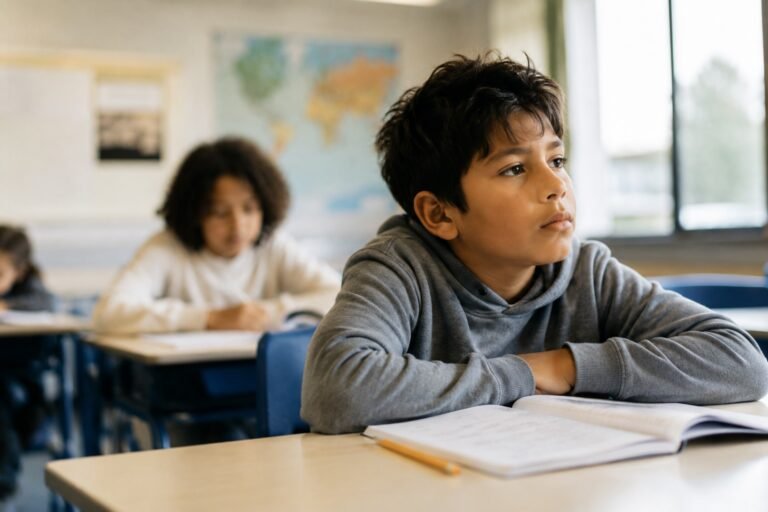
Research can tell us a great deal. But there are also the people I see around me. Adults who describe how difficult it can be for them to find their place within the expectations of society, sometimes spending years searching for an environment in which they feel they belong. And children who spend years insufficiently challenged by the work they are given at school, gradually doing less and sometimes beginning to underachieve. I also see things that are much harder to capture in numbers. Children who struggle to connect with their same-age peers. Children who take in a great deal of sensory input and find a busy classroom exhausting. Children who behave in socially desirable ways and continually adapt themselves to what they believe their environment expects from them. Sometimes they can keep doing that for years. Until they can’t.
I want to be careful here. Research does not support the idea that all gifted children are highly sensitive, lonely, perfectionistic, or easily overstimulated. Just like any other group of people, gifted people differ enormously from one another. My personal observations are therefore not evidence of what “the gifted child” is like. But they do keep bringing me back to one question:
What does this individual child need not just to get by, but to truly develop?
A child who finds the schoolwork easy still has things to learn
When a child struggles with the material being taught, additional support makes perfect sense to us. But when a child already understands that material, or grasps it much faster than their classmates, we can easily assume: They’ll be fine. And that assumption can make us overlook something important. Learning is about more than getting the right answer. It means attempting something when you don’t know whether you will succeed. Making mistakes. Dealing with frustration. Trying again. Asking for help. Persevering.
When children spend years at school without being sufficiently challenged, they have fewer opportunities to practice learning when learning actually requires effort. That matters because Raoof and colleagues’ 2024 systematic review found that factors including motivation, self-regulation, self-efficacy, and learning strategies are associated with underachievement among gifted students. The literature included in their review also discusses avoidance of challenging experiences and fear of failure among underachieving gifted students.³
Appropriate challenge therefore matters for more than today’s grades. Childhood and adolescence are also the years in which students learn how to learn: how to persevere when something becomes difficult, cope with frustration, plan, ask for help, and experience that effort is a normal part of growth.
This also raises a question for me that extends beyond the school years. What happens when a child has had too few opportunities to develop these skills and only encounters situations later, in higher education or the workplace, where cognitive ability alone is no longer enough? We cannot conclude from this research that gifted children are therefore more likely to struggle later in life. But it is one more reason for me not to wait until a child begins experiencing problems before providing an appropriate level of challenge. A child who finds the material offered at school easy still deserves learning goals that match their development.
Different does not mean better
We generally have little difficulty saying that one child is exceptionally musical, artistic, athletic, or practical.
Intelligence feels different. Even the word gifted can suggest a hierarchy. A gift sounds like something extra. Something a person should simply be grateful for. I sometimes wonder whether the word itself contributes to the misunderstanding of what giftedness actually means. But differences in cognitive ability are not differences in human worth.
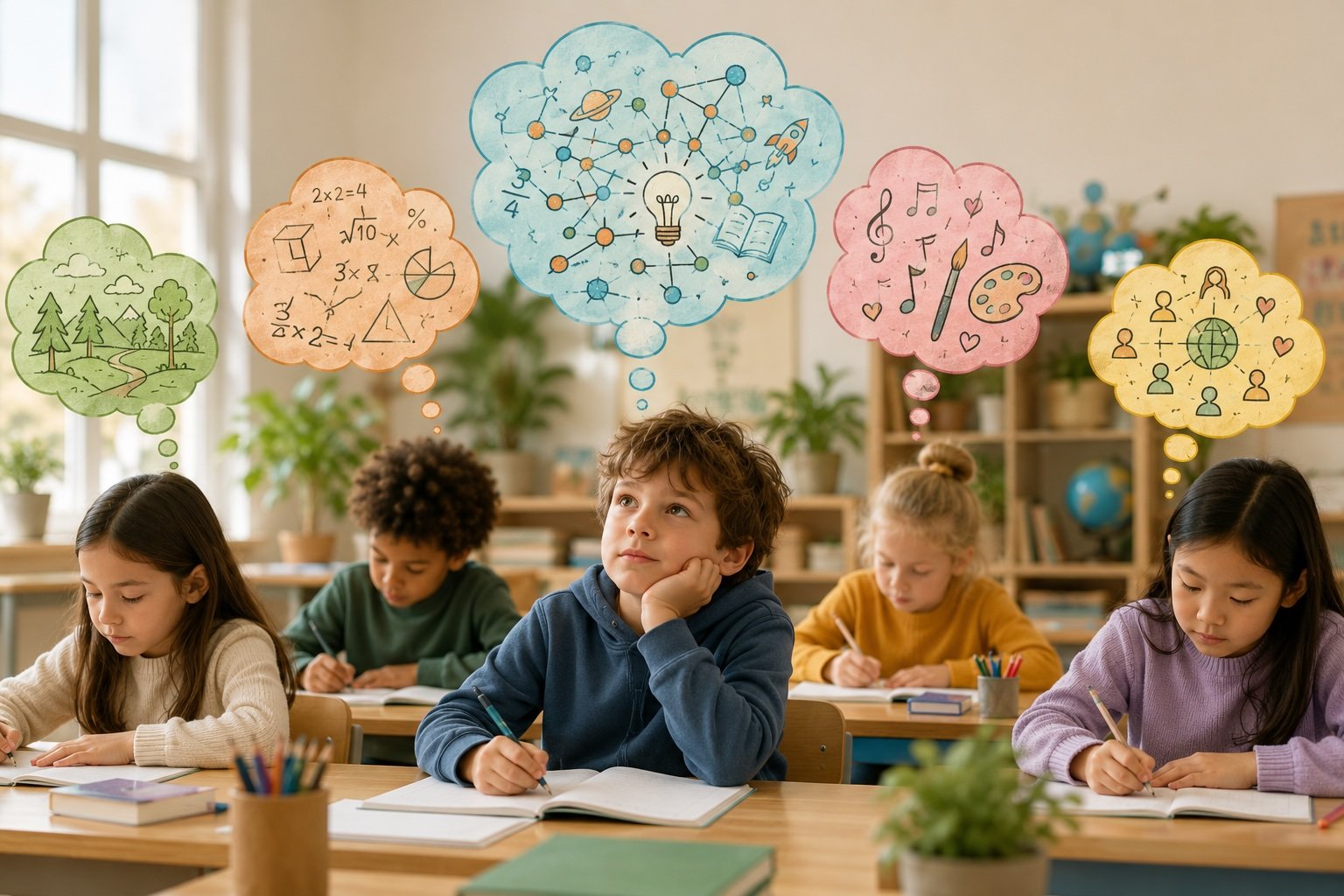
A child who is cognitively advanced and quickly recognizes abstract patterns is no more valuable than a child with different talents and strengths. At the same time, children should not have to hide the way they think or continually change themselves just to feel that they belong. That is why I believe it is important for children to learn that people differ in countless ways. We think differently. We learn differently. We have different talents, interests, boundaries, and needs. Understanding those differences is not the same as putting people into boxes.
Why we need to talk about giftedness
That is why I believe conversations about giftedness and gifted education matter. Not because every personal experience of giftedness should be treated as scientific fact. Personal experiences and scientific conclusions are not the same thing. And not because every gifted child needs additional help. But because misconceptions about giftedness still exist. The NAGC specifically identifies several of them, including the beliefs that gifted students will simply succeed on their own and that gifted education is inherently elitist. The organization also emphasizes that students with gifts and talents need access to appropriate learning opportunities to realize their potential, while recognizing that gifted children do not all look or behave alike.¹ If we reduce giftedness to simply being very smart, we miss the more important question of what an individual child needs in order to learn and develop. That is ultimately the question that matters most to me. Not:
Do gifted children have a harder life than other children?
Or:
Is giftedness an advantage or a disadvantage?
But:
Is this child getting what they need to grow?
Sometimes that means more challenging academic work. Sometimes it means learning how to make mistakes. Sometimes it means spending time with children who share similar interests or ways of thinking. And sometimes it means learning about yourself: understanding how you think, recognizing that other people may think very differently, and discovering that you do not have to make yourself smaller in order to belong.
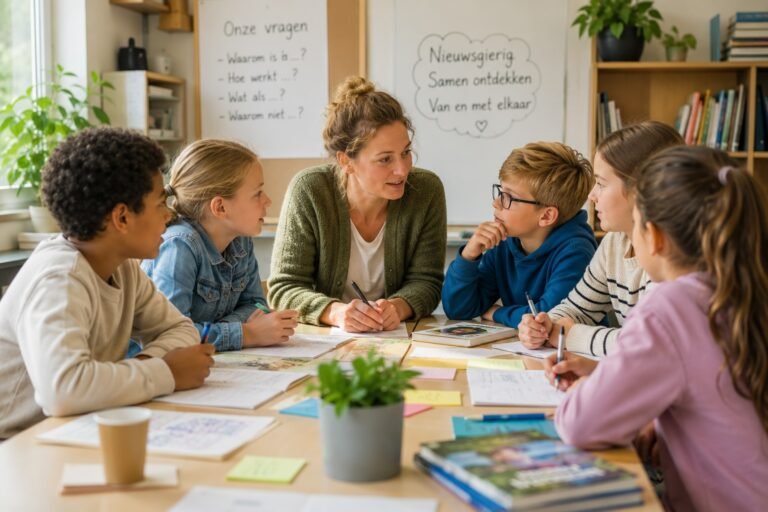
That is also why my learning programs are not focused solely on cognitive challenge. Children explore how their own thinking works, get to know themselves better, and discover how differently people can think, feel, and respond. Not to tell children who they are. But to give them the space to discover that for themselves.
More attention to giftedness does not mean turning giftedness into a problem. It can mean making sure that a child does not have to struggle first before we start asking what they need.
References
- National Association for Gifted Children (NAGC). Myths About Gifted Students and What Is Giftedness? NAGC resources on giftedness and gifted education.
- Vergeer, J., van Weerdenburg, M., Schils, T. & Bakx, A. (2026). Parents, teachers, and policy makers in educational interventions for gifted students: Systematic review study. Acta Psychologica, 266, 106784. https://doi.org/10.1016/j.actpsy.2026.106784
- Raoof, K., Shokri, O., Fathabadi, J. & Panaghi, L. (2024). Unpacking the underachievement of gifted students: A systematic review of internal and external factors. Heliyon, 10(17), e36908. https://doi.org/10.1016/j.heliyon.2024.e36908
Every child thinks differently
Want to challenge gifted children to think more deeply and stay curious? Get our free Brainbender lesson and let children discover just how easily their brains can be fooled. A playful lesson filled with curiosity, critical thinking, and surprising insights. You’ll also occasionally receive inspiration, practical tips, and new ideas.