How to engage more students in classroom discussions: Creative strategies that get everyone thinking
“Who knows the answer?”
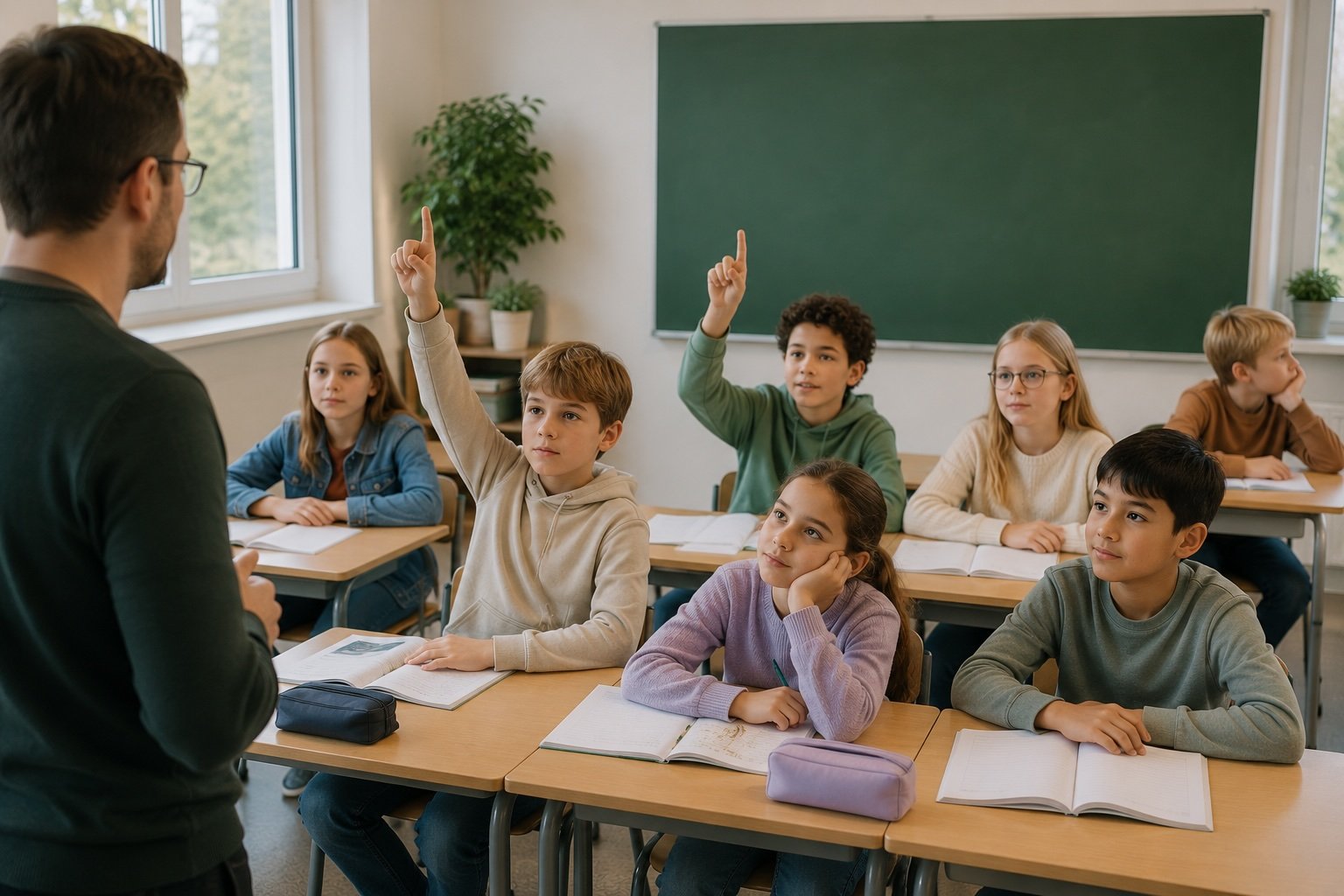
Even before the teacher has finished asking the question, the same hands shoot into the air. They’re often the same students: quick thinkers, confident speakers or children who aren’t afraid of getting the answer wrong. Meanwhile, much more is happening beneath the surface.
Some students are still thinking. Others are carefully searching for the right words. Some need a little more certainty before they feel comfortable speaking up. And there are students who have long since learned that someone else will answer first, so they simply stop participating.
The way you invite students to respond may seem like a small detail, but it can make a big difference in who actively engages in the thinking and who ultimately shares their ideas.
That is why more and more teachers are exploring creative teaching strategies that encourage every student to think, not just those who are quickest to raise their hands.
Why traditional classroom discussions don’t always work
In many classrooms, discussions still revolve around speed. The first student to raise a hand gets the opportunity to answer. Although this approach seems efficient, it often creates unintended patterns:
- the same students dominate classroom discussions;
- quieter students gradually stop participating;
- students have little time to think before answering;
- teachers gain only a limited picture of what the class actually understands.
As a result, valuable thinking often remains invisible, or never happens at all.
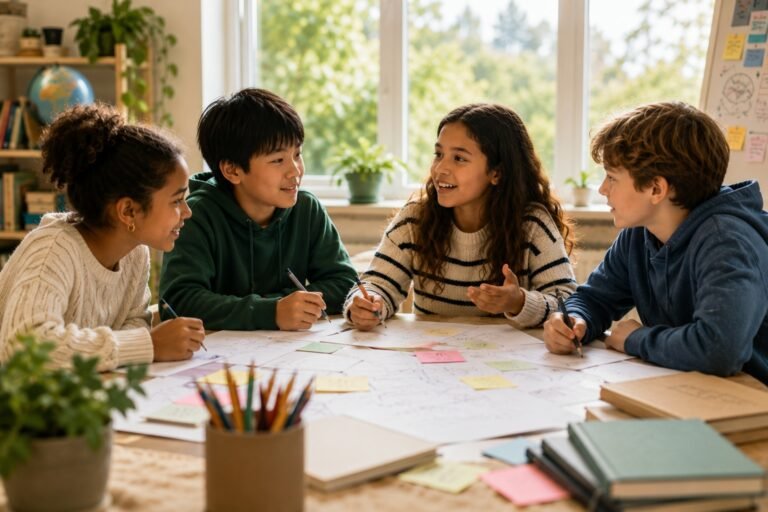
That is why there is growing interest in active learning, collaborative learning, and inquiry-based learning. When students are given time to think independently before discussing their ideas with a partner, more of them have a chance to develop a response before the whole-class discussion begins.¹
Giving students more thinking time increases participation
One simple change can make a remarkable difference: intentionally giving students time to think before inviting answers.
Those few seconds of silence may feel uncomfortable at first, but they give students time to organize their thoughts. Even a few extra seconds of thinking time can make a difference. Classic research on wait time found that when students were given more time to think, they gave longer responses, offered alternative explanations more often, and responded more frequently.²
When students are first invited to write their ideas on a mini whiteboard or a sheet of paper, the focus shifts from answering quickly to thinking carefully. Suddenly, it is no longer only the fastest students who participate but the entire class has the opportunity to think.
Thinking becomes visible, even when speaking is not the only way to contribute.
Creative ways to collect answers in the classroom
More and more teachers are using creative teaching strategies to collect answers in ways that actively involve every student. Examples include:
- mini whiteboards;
- sticky notes;
- response cards;
- placemat activities;
- think–pair–share²;
- having students position themselves around the classroom;
- digital quiz tools;
- cooperative learning structures.
These strategies often create a calmer classroom while increasing student engagement. They also reveal something many teachers discover: students who rarely speak during whole-class discussions often have thoughtful and creative ideas when speaking is not the only way to participate.
From correct answers to visible thinking
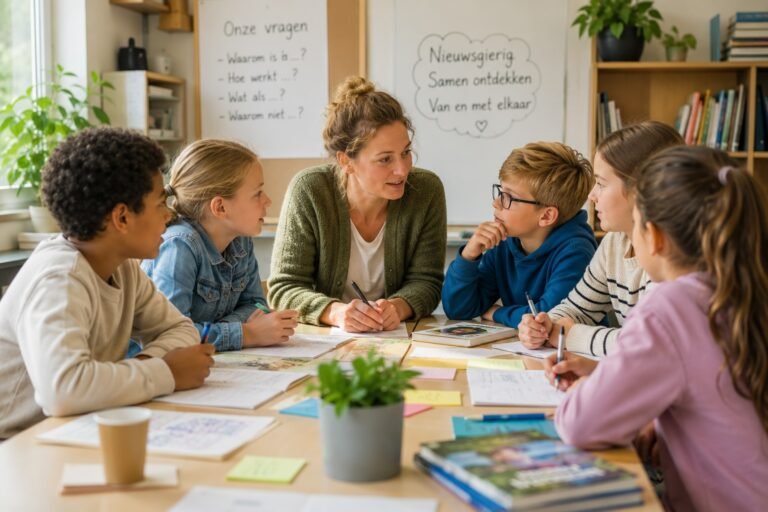
Not every answer needs to be judged right away. Sometimes it is far more valuable to explore how a student arrived at an idea. What was the thinking behind it? Who had a similar thought? Who sees it differently? And what new question might this answer lead to? Students can share ideas that are still developing. There can be room for uncertainty and for different perspectives to exist side by side. In this way, an answer becomes not only an endpoint, but also a starting point for further thinking.
Instead of directing every answer back to the teacher, students can also learn to respond to one another by asking questions such as:
- Who heard an interesting idea?
- Who had a similar thought?
- Who sees it differently?
At that point, a classroom discussion changes from a simple question-and-answer routine into a shared process of thinking and learning.
Active participation starts with a different approach
Creative ways of calling on students are about more than simply adding variety to your teaching strategies. They raise a much bigger question: Who gets the opportunity to think and participate in your classroom?
Learning does not happen only for the student who gives the fastest answer. It also happens when students experience that thinking can take time, ideas can develop, and different answers or perspectives can be explored. Sometimes the answer itself matters, but the thinking process deserves just as much attention: How did the student arrive at this answer? What possibilities did they explore? And what could the next step be?
Perhaps the most important question in education is no longer:
“Who knows the correct answer?”
Instead, we should ask:
“How can we make sure every student has the opportunity to think?”
Scientific background
- Rowe, M. B. (1974). Wait-time and rewards as instructional variables, their influence on language, logic, and fate control: Part one—wait-time. Journal of Research in Science Teaching, 11(2), 81–94. https://doi.org/10.1002/tea.3660110202
- Mundelsee, L., & Jurkowski, S. (2021). Think and pair before share: Effects of collaboration on students’ in-class participation. Learning and Individual Differences, 88, 102015. https://doi.org/10.1016/j.lindif.2021.102015

Ready to put this into practice?
Sign up and receive a free lesson activity for curious thinkers. Discover ways to help students do more than simply give answers by encouraging them to think, explore, and collaborate. You’ll also receive occasional practical tips, inspiration, and fresh insights for your classroom.