Why play-based learning is essential for gifted children
When we think about education for gifted children, enrichment, greater depth, and more challenging assignments often come to mind. That makes sense: when a child quickly masters the regular curriculum, they need enough challenge to truly keep learning. But challenge does not always have to mean thinking harder.
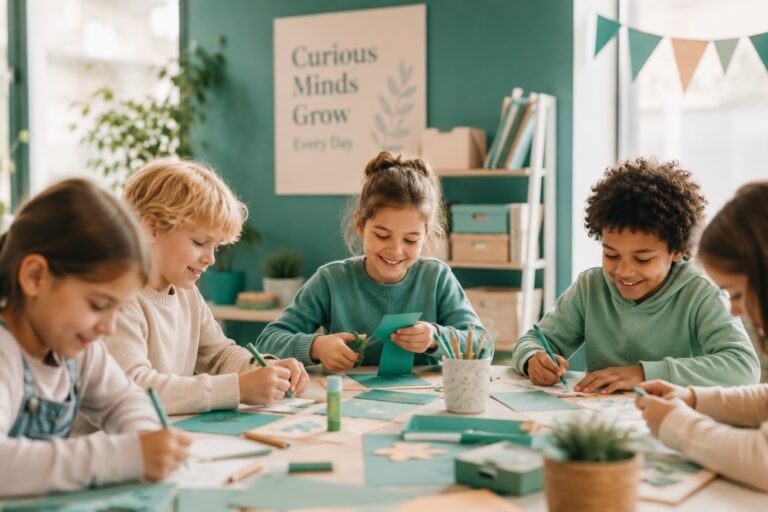
Building, moving, creating, experimenting, and playing can offer valuable learning experiences too. Especially when a child does not know exactly what the outcome will be, something interesting happens. Choices have to be made, ideas are tested, things fail, and plans need to be adjusted. Along the way, an entirely new idea may even emerge.
Play and learning can actually support one another.
Play is learning, too
When we think of play, we may first think of relaxation or free time. But many learning processes can take place during play. Children explore possibilities, make choices, and discover what happens.
Research on guided play, play in which children have room to explore for themselves while an adult or the learning environment provides direction toward a learning goal, suggests that this approach can benefit the development of certain skills. A systematic review and meta-analysis found positive results for some early math skills, vocabulary, and cognitive flexibility, for example. For other developmental outcomes, no clear differences were found.¹
That last point matters. Play-based learning is not a magic solution, and not every learning goal needs to be turned into play. But it does show that play and serious learning can work very well together.
And that is exactly what I find interesting. Play does not have to replace learning. It can offer another way into learning. One in which not everything is predetermined and there is still something for the child to discover.
What about gifted children?
Of course, there is no single type of gifted child. One child eagerly dives into something new, while another first wants to know exactly what the intention is. One child thrives on open-ended tasks, while another needs more structure. That is why I find it more useful not to ask whether gifted children “need more play,” but to look at what an individual child still has to learn. A child who races through the curriculum may, for example, struggle when there is no step-by-step plan, clear answer, or guaranteed success. And that is precisely where play can become interesting.
A child trying to build a complex structure may need to persevere when it collapses. A student designing a solution with loose materials may discover that the first idea does not work. During an open-ended creative task, a child has to make choices rather than follow a step-by-step plan. The challenge lies not only in the difficulty of the content, but also in the learning process itself.
Not everything needs to have one right answer
Many school assignments work toward a clear endpoint. A math problem has an answer. A word is spelled correctly or incorrectly. Facts are right or wrong. There is nothing wrong with that. Sometimes there simply is a correct answer. But children also benefit from tasks where the answer is not predetermined.
- What could you build with these materials?
- How would you solve this problem?
- Can you come up with three completely different solutions?
- What happens if you try it another way?
With these kinds of tasks, the focus shifts from Do I know the right answer? to What can I try? That creates room for creativity, flexibility, curiosity, and reflection. A first idea does not have to be the best idea. In fact, an idea that does not work can lead to interesting new questions.
Focusing on the process: what happens along the way?
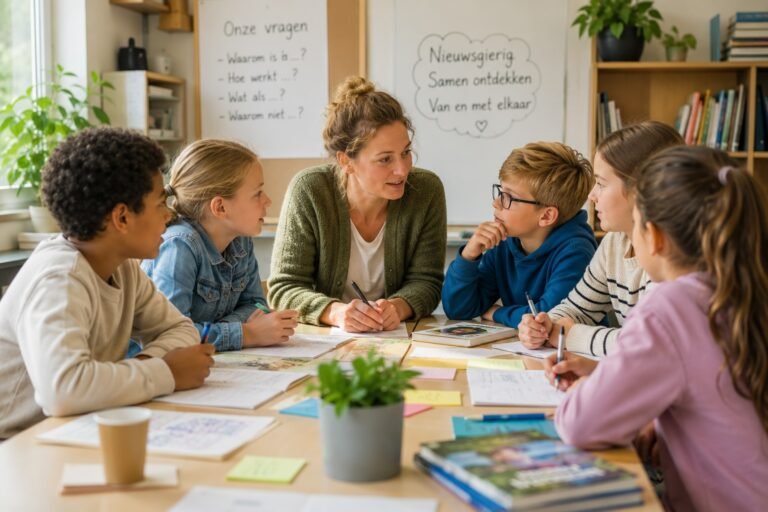
That is why I value a process-focused approach so much. Instead of looking only at what a child ultimately creates, I am curious about what happens along the way. What choices did the child make? What did not work? When did they change their approach? Did something emerge that they had not planned at all? For some students, this will feel completely natural. For others, it may be difficult when there is no clear step-by-step plan or predetermined outcome. That does not have to be a problem. That may be exactly where the learning begins.
As a teacher, you do not always have to provide an immediate solution in those moments. Sometimes a question helps. Sometimes new materials do. Sometimes a child needs more structure. And sometimes it is interesting to do nothing for a moment and see what the child discovers independently.
Thinking, feeling, and experiencing
Cognitively strong children have something incredibly valuable: their ability to think. They can analyze, make connections, and work through complex questions. It is tempting to keep appealing to that strength, especially when it is something a child is good at and is often recognized for. But I also think it is important for children to learn not only to trust what they can think of, but to pay attention to what they feel and experience as well. What do I notice in my body? When does something become too much? What gives me energy? What drains my energy? What do I need right now?
This does not mean that gifted children as a group are less connected to their feelings. There is not enough scientific evidence to make that claim. But it does raise an important question for me: if thinking is a major strength and a quality that is continually encouraged and valued, how much room is left to develop other ways of experiencing and learning?
Sensory processing can play a role here as well. Not every child processes the world around them in the same way. Some children actively seek certain types of sensory input, while others are more easily overwhelmed by sound, touch, movement, or busy environments. There can be considerable differences among gifted children in this respect, too.
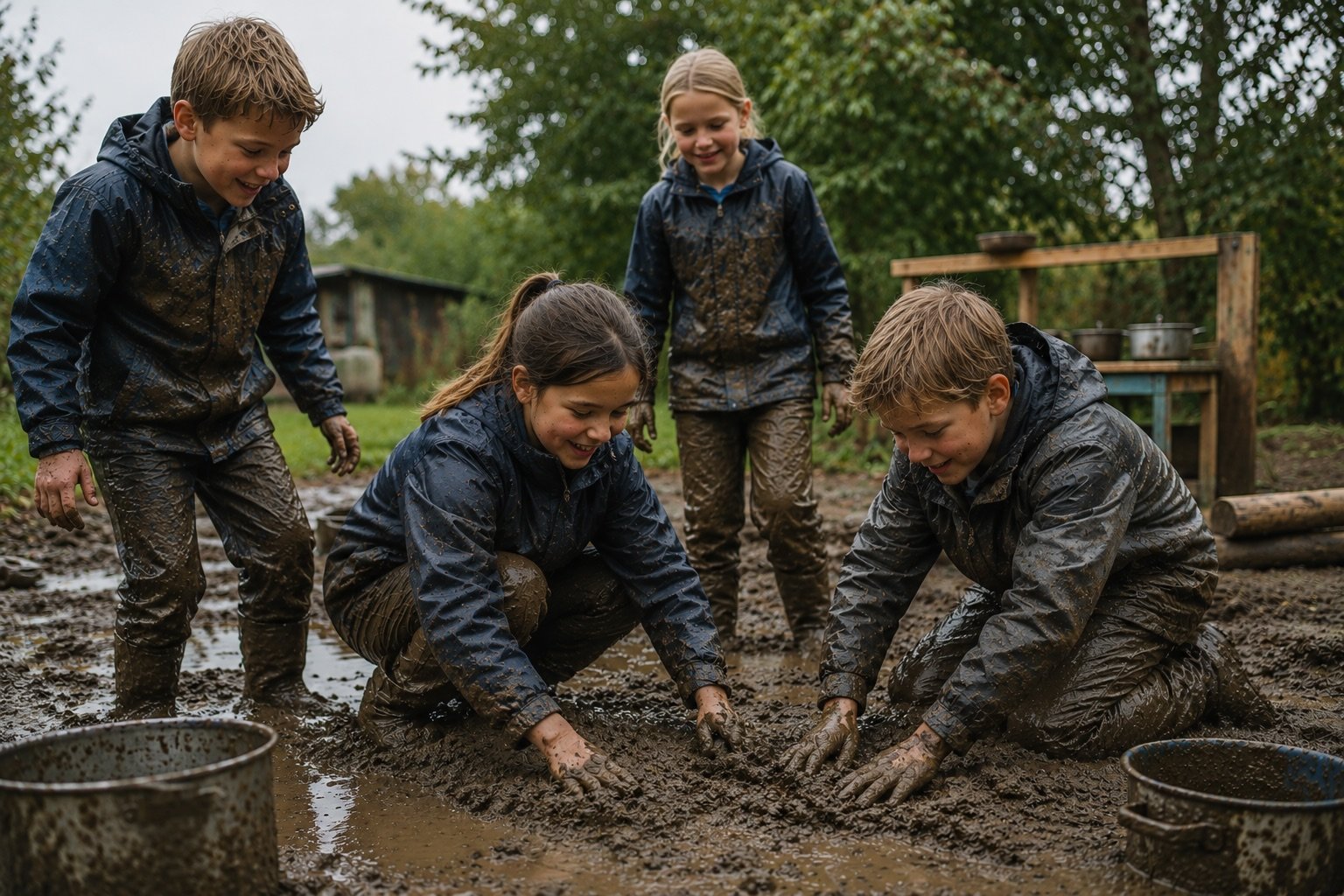
Sensory activities can be one way to introduce that variety. Think of working with clay, sand, water, paint, natural materials, or materials with different textures. A child can feel, knead, build, mix, and experiment without knowing exactly what the outcome should be. For me, the value is not in assuming that sensory play will “regulate” every gifted child or get them “out of their head.” It simply offers another way to learn and experience. As a teacher, you can observe: What makes this child curious? What gives them energy? And what do they seem to need?
Movement can be part of learning, too
Learning does not always have to happen while sitting at a desk. Active learning can combine movement with an academic task. For example, students might collect answers from different places around the classroom, physically arrange concepts, build a model on a large scale, or actually measure, move, and test things during an investigation. Research on physically active learning shows positive results for physical activity and, in some studies, for on-task behavior. Findings for cognitive performance and academic outcomes are less consistent.²
The same principle applies here: movement is not automatically better than sitting. A more useful question is: Which way of working best fits what we want children to learn and experience right now?
Play does not have to feel childish
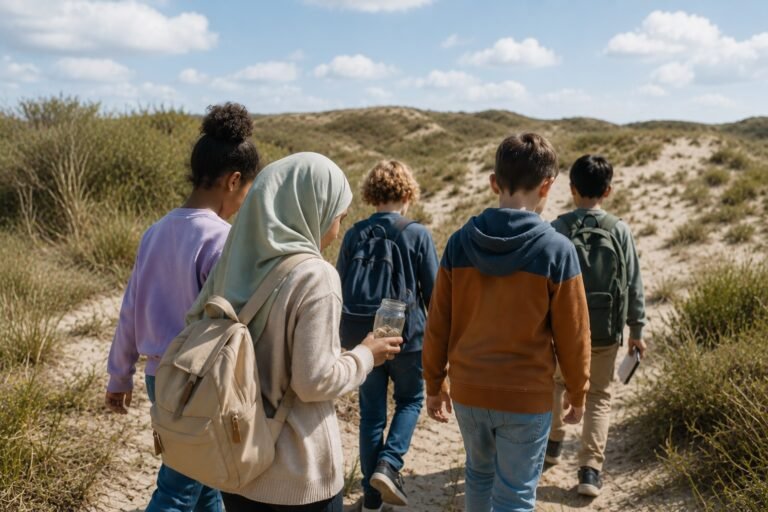
The term play-based learning can sometimes bring to mind young children in a play center. But play can be much broader than that. A group of older students can design a complex structure. Another group can create their own experiment. Students can solve a mystery, build a prototype, investigate something, test a strategy, or try to solve a problem using limited materials.
For me, the playful element lies in exactly that: not necessarily in a play corner or a game, but in the freedom to explore, choose, try, fail, adjust, and try again. That can create new learning experiences even for a student who understands things quickly and already knows a great deal.
Gifted learners need more than harder work
Cognitive challenge remains important. A student who has already mastered the material gains little from endlessly repeating work at the same level. But simply offering more difficult worksheets is not a complete answer to appropriate education either. A child might also learn to:
- explore different solutions;
- develop their own approach;
- collaborate with others;
- create something without knowing the outcome in advance;
- change a plan along the way;
- deal with something that does not work right away;
- explain why they made a particular choice;
- reflect on their own thinking and learning process.
Challenge, then, is not only about how difficult the content is, but also about what a child encounters during the learning process.
More than strong thinkers
Perhaps, for me, that is the most important reason playful, active, and inquiry-based learning deserves a place in gifted education. Not because every gifted child needs the same thing. And not because play is better than good instruction or meaningful cognitive challenge. It is the combination that I find interesting.
Ultimately, we do not only want children who know a lot or can think quickly. We want children who remain curious, dare to try something new, and continue discovering more about the world—and about themselves.
Learning materials that support this approach
You can see this philosophy reflected in the lesson programs from The Curious Mind Expedition as well. Cognitive challenge is combined with inquiry, creativity, collaboration, movement, and reflection. Not every lesson includes all of these elements, and not every activity serves the same purpose. Sometimes the challenge lies in a complex question; at other times, it lies in exploring different solutions or developing an idea of their own.
The goal is not simply to keep children busy or to turn every learning objective into a game. The goal is to create rich learning experiences in which children genuinely have something to discover and learn.
Because even a child who thinks incredibly fast still has plenty left to discover.
Scientific background
- Skene, K., O’Farrelly, C. M., Byrne, E. M., Kirby, N., Stevens, E. C., & Ramchandani, P. G. (2022). Can guidance during play enhance children’s learning and development in educational contexts? A systematic review and meta-analysis. Child Development, 93(4), 1162–1180. DOI / publicatie
- Daly-Smith, A. J., et al. (2018). Systematic review of acute physically active learning and classroom movement breaks on children’s physical activity, cognition, academic performance and classroom behaviour. BMJ Open Sport & Exercise Medicine, 4, e000341. DOI / publicatie
Ready to bring learning to life?
Sign up and receive a free, inspiring lesson activity for curious thinkers. Discover how learning can be combined with creativity, movement, and inquiry. You’ll also receive occasional practical tips and fresh ideas.