Why the first weeks of school matter for gifted children
As summer vacation comes to an end, children look ahead to the new school year in different ways. Some can’t wait to go back to school, while others feel nervous or reluctant. For many children, the start of a new school year brings mixed emotions. They may be looking forward to seeing friends again, wondering who their new teacher will be, or feeling uncertain about what the year will bring.
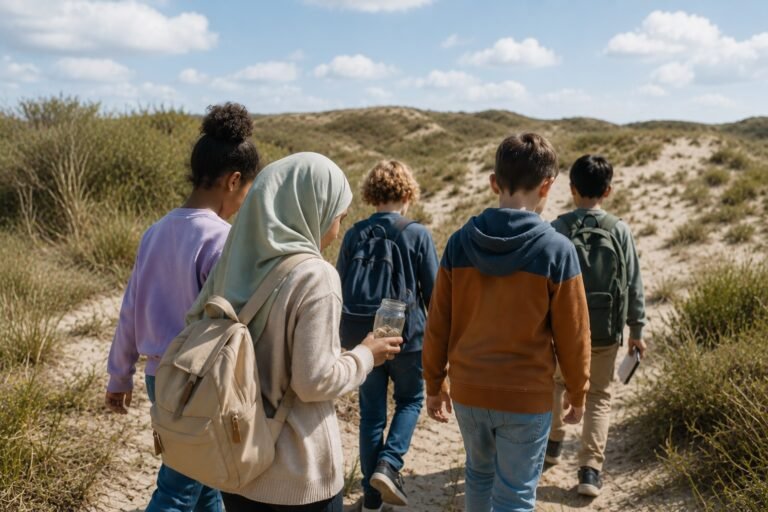
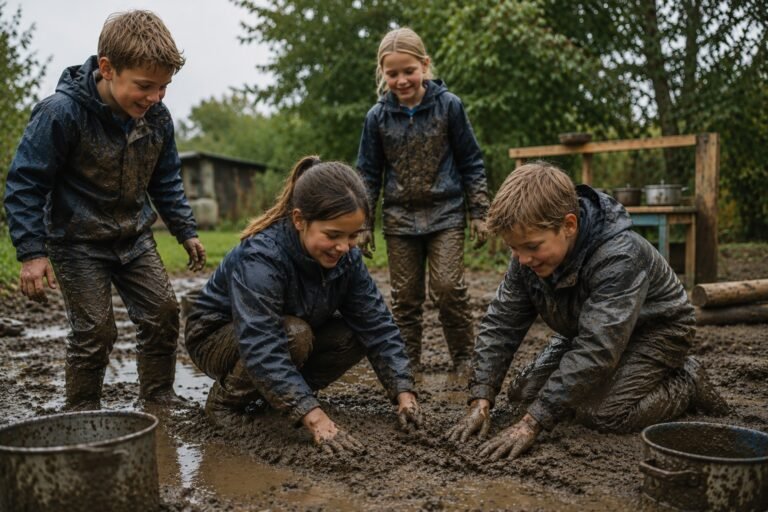
In many schools, these first weeks are intentionally devoted to building relationships and creating a positive classroom community. And for good reason. During this time, children are doing much more than learning names and routines. They’re discovering how classmates treat one another, how their teacher responds to questions and mistakes, and whether this is a place where they feel comfortable asking questions, sharing ideas, and being themselves.
For many gifted children, these first impressions can have a lasting impact on how they experience the rest of the school year. Not because every gifted child is the same, but because many of them are especially sensitive to how curiosity, differences, and fairness are valued and responded to.
As the class gets to know one another, children are also getting to know their classroom community.
Not every gifted child responds to a new school year in the same way. Some walk into the classroom full of excitement. Others quietly observe what’s happening before joining in. Still others seem to adapt with ease.
During those first few days, however, many children, consciously or unconsciously, are asking themselves the same questions:
- Can I be myself here?
- Is there room for my ideas?
- Is it okay to make mistakes?
- Are differences valued here?
- Does my teacher really listen to what I have to say?
The answers to these questions often determine how much of themselves children choose to show.
Children are also forming an impression of their teacher.
A first impression of a teacher is often shaped by small moments. Does the teacher truly listen when a child has something to say? Is there room for unexpected questions? How does the teacher respond to a wrong answer? What happens when one student laughs at another or tries to look cool at a classmate’s expense?
Children pay attention not only to what a teacher says, but especially to what a teacher does. They notice how conflicts are handled, how boundaries are maintained, and how differences are approached. These early experiences often determine whether children gain the confidence to be themselves.
How curiosity, clarity, and role modeling work together
A positive classroom community doesn’t develop by chance. It grows when three elements reinforce one another: curiosity, clarity, and positive role modeling.
Curiosity helps children truly get to know one another. By asking questions and listening to each other, they develop understanding. Differences become less likely to be seen as something strange and more as opportunities to learn from one another.
Clarity gives children a sense of security and direction. They know what is expected of them and see that their teacher takes action when boundaries are crossed. Not because rules are the most important thing, but because mutual respect is the foundation of the classroom community.
The teacher plays an important role in modeling these behaviors. Children learn not only from what a teacher explains, but also from what they see their teacher do. A teacher who listens with curiosity, responds respectfully to different opinions, sees mistakes as opportunities to learn, and sets boundaries calmly shows children every day how to treat one another. Children learn from that example.
This helps create a classroom community where children feel comfortable saying what they think, honestly admitting when they don’t understand something, taking pride in what they already know, and staying curious about one another and the world around them.
Why is this especially important for gifted children?
Many gifted children think differently, make unexpected connections, and ask questions that go beyond the material being taught. That doesn’t make them better or worse than other children, but it can make them feel different from their peers.
For that reason, many gifted children quickly notice how differences are treated within the classroom community. When curiosity is encouraged and different ways of thinking are welcomed, they may feel less need to adapt in order to fit in. They experience that they can be themselves without having to hide their questions, interests, or ideas.
The first weeks of school can therefore have a significant influence on how a child experiences the rest of the school year.
What can parents do?
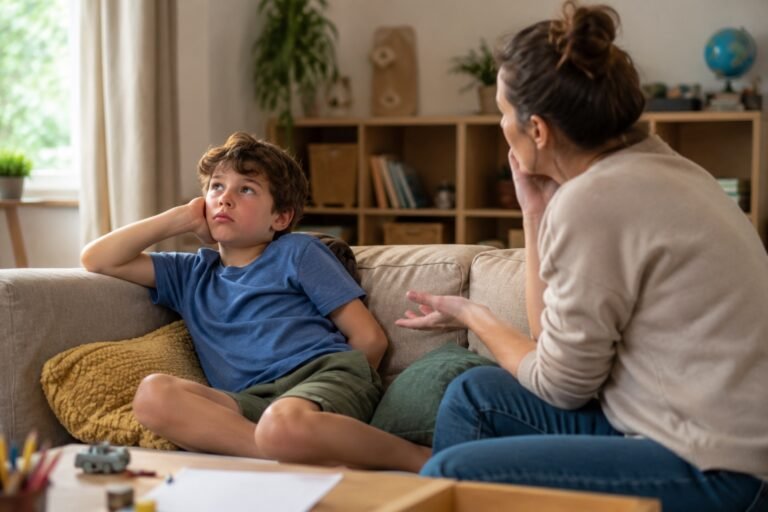
As a parent, you don’t need to prepare your child for the academic content. What’s far more important is giving them space to talk about how they feel as the new school year begins. Try asking more than just, “Are you excited to go back?”
Also ask:
- What are you looking forward to?
- What are you feeling nervous about?
- What do you hope will be different this school year?
- When do you feel most comfortable in a classroom?
By being genuinely curious about what’s on your child’s mind, you help them put their expectations, worries, and needs into words. Try not to put too much pressure on having a perfect start. A school year is a long journey. Some children feel at home right away, while others need more time to find their place. Both are completely normal.
What can teachers do?
The first weeks of school provide a unique opportunity to shape the culture of the classroom community. Go beyond introductory questions about hobbies or favorite colors. Ask children what they’re curious about, what questions are on their minds, and what excites them.
Show that asking questions is just as valuable as giving answers. Respond with curiosity when a child thinks differently. Talk openly about mistakes and let children see that you are still learning too. At the same time, be clear about how people are expected to treat one another. Step in when children laugh at, exclude, or put down a classmate, and use those moments to explore together how their behavior affects others. This helps children understand not only what the classroom agreements are, but also why they matter.
Building a safe classroom community together
A positive classroom community doesn’t grow from a list of rules posted on the wall. It develops when children discover together how they want to treat one another, learn to value differences, and understand how their behavior affects others. With that vision in mind, we developed PeerPact.
Through four interactive lessons, PeerPact helps students explore the meaning of curiosity, respect, listening, and responsibility. Rather than memorizing rules, they experience together how to build a classroom where everyone has the opportunity to learn, ask questions, and be themselves. During the first weeks of school, PeerPact can provide a valuable foundation for the rest of the school year.
Conclusion
Perhaps the most important question at the beginning of a new school year isn’t:
“Does a child feel safe?”
But:
“Does a child feel safe enough to be themselves?”
Does a child feel comfortable asking a difficult question? Making a mistake? Sharing a different opinion? Or honestly saying that something feels very easy, or very difficult? When curiosity, clarity, and respect come together, they create a classroom where children learn not only math, reading, and writing, but also how to live and learn together.
How do you experience the first weeks of school?
Are you a parent, teacher, or someone who works with gifted children? I’d love to hear about your experiences. What do you think helps create a classroom where children feel comfortable being themselves? Share your thoughts in the comments below.
Scientific background
The ideas presented in this article are informed by research on psychological safety (Edmondson), Self-Determination Theory (Deci & Ryan), school belonging and motivation in education, as well as research on the motivation and social connectedness of gifted students.
- Deci, E. L., & Ryan, R. M. (2000). The “What” and “Why” of Goal Pursuits: Human Needs and the Self-Determination of Behavior. Psychological Inquiry, 11(4), 227–268.
- Edmondson, A. C., Higgins, M., Singer, S., & Weiner, J. (2016). Understanding Psychological Safety in Health Care and Education Organizations: A Comparative Perspective. Research in Human Development, 13(1), 65–83. https://doi.org/10.1080/15427609.2016.1141280
- Haidari, S. M., Karakuş, F., & Koçoğlu, A. (2020). Teacher and Student Perspectives on Safe Learning Climate in Gifted Education. Journal of Theoretical Educational Science, 13(2), 311–333. https://doi.org/10.30831/akukeg.581632
- Jirout, J., & Klahr, D. (2020). Supporting Curiosity in Schools and Classrooms. Current Opinion in Behavioral Sciences, 35, 7–13. https://doi.org/10.1016/j.cobeha.2020.05.006
- Johnson, C. E., Keating, J. L., & Molloy, E. K. (2020). Psychological Safety in Feedback: What Does It Look Like and How Can Educators Work With Learners to Foster It? Medical Education, 54(6), 559–570. https://doi.org/10.1111/medu.14154
- Wiley, K. R. (2020). The Social and Emotional World of Gifted Students: Moving Beyond the Label. Psychology in the Schools, 57(10), 1528–1541. https://doi.org/10.1002/pits.22340

Start the school year with a lesson that inspires curiosity.
Get our free lesson, Brainbender, and let children discover that great questions are often more important than quick answers. You’ll also receive occasional inspiration, practical tips, and fresh insights into curiosity, giftedness, and meaningful learning.